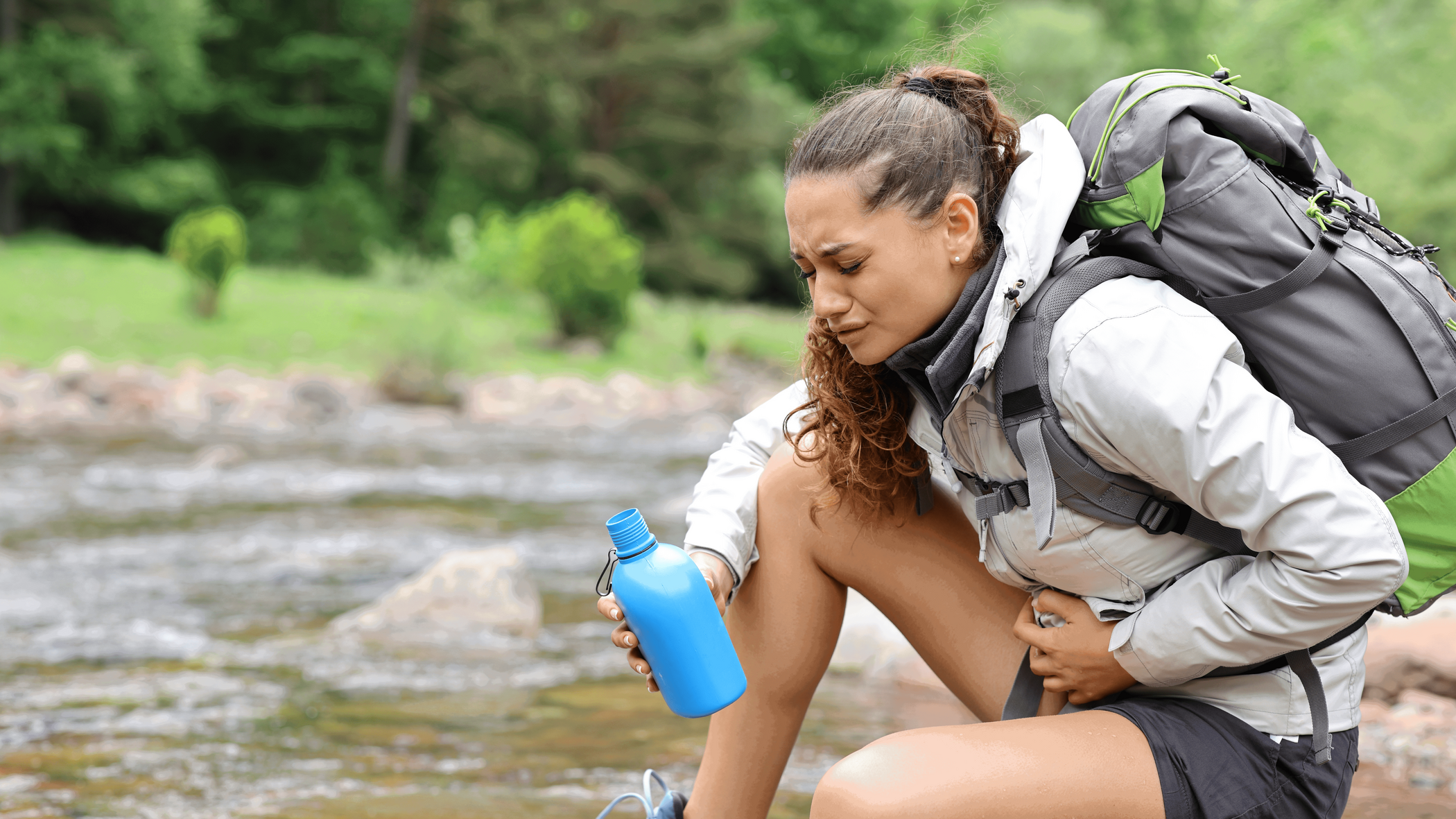
Prevent Travellers' Diarrhoea
Imagine setting off on a holiday, adventure, or business trip, only to be struck by the discomfort of Travellers' Diarrhoea. Commonly known as "Bali Belly," "Delhi Belly," or "Montezuma's Revenge," Travellers’ Diarrhoea is a major health concern that can seriously disrupt your plans.
Understanding Travellers’ Diarrhoea
Over 1.7 billion global cases of diarrheal disease and estimated 2.2 million deaths are reported annually, with the highest burden in low to middle income countries.8
This illness can arise from infections or toxins produced by bacteria, viruses, parasites, or chemical contaminants. It’s particularly common among travellers moving from regions with high hygiene standards to areas with less developed sanitation systems.8

According to the Centre for Disease Control, up to 70% of travellers may experience Travellers’ Diarrhoea, primarily caused by bacterial pathogens like E. coli, Campylobacter, Salmonella, and Shigella. These bacteria can be present in tap water, beverages, ice, unwashed fruits, and vegetables, and on surfaces like utensils. Even street food and upscale restaurants can pose risks.1
Recognising the Symptoms
Travellers’ Diarrhoea typically starts suddenly with loose, watery stools, stomach cramps, and a strong need to use the bathroom. Symptoms can vary from mild to severe and in about one-third of cases, the symptoms are severe enough to require confinement or bed rest.
Travellers’ Diarrhoea typically begins suddenly and may include:

Loose, watery stools

Stomach cramps

Urgent need to use the bathroom

Bloating

Nausea

Vomiting

Fever

Dehydration
High risk areas for Travellers’ Diarrhoea
Risk of Travellers’ Diarrhoea is common risk in high-risk areas like Africa, Asia, and the Americas.
- Africa
- Asia (Thailand, Bali, Indonesia, China, Vietnam, Cambodia, Laos)
- The Indian Sub-continent
- The Middle East
- South & Central America
- Mexico

Tips for reducing the risk of Travellers’ Diarrhoea
Travellers’ Diarrhoea is a disease typically caused by pathogenic bacterial contamination of ingested food and water which can affect even the most experienced traveller.1 It could shatter your carefully made holiday plans and sometimes, leave you confined to your hotel room or bedridden for days. To avoid Bali Belly, Montezuma’s Revenge or Travellers’ Trot, we recommend these simple tips.
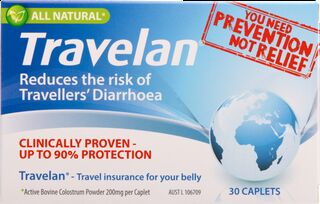
- Take Travelan® before meals.
- Wash your hands frequently, especially before meals.
- Avoid street food from unclean vendors or food that is not hot.
- Steer clear of uncooked foods, salads, and unpeeled fruit.
- Drink and brush your teeth with bottled water only.
Citations
- 1 Centers for Disease Control and Prevention
- 2 Centers for Disease Control and Prevention.Food and water precautions for travelers. CDC Yellow Book, 2024.
- 3 Otto et al., (2011). Scandinavian Journal of Gastroenterology, 46(7-8), pp.862-868.
- 4 Steffen, R. (2019). Epidemiology of travellers’ diarrhoea.
- 5 Sears KT, et al. Bioactive Immune Components of Anti-Diarrheagenic Enterotoxigenic Escherichia coli Hyperimmune Bovine Colostrum Products. 2017.
- 6 Travelan Scientific Review. (2018).
- 7 US Department of Defense, Armed Forces Research Institute of Medical Sciences (AFRIM). (2019, September 4)
- 8 World Health Organization. Diarrhoeal disease. (2024, March 7).